LinkedIn Stopped Rewarding Volume. It Started Rewarding Evidence.
What changed on LinkedIn in Q3 2026, and what anyone building authority there should do about it
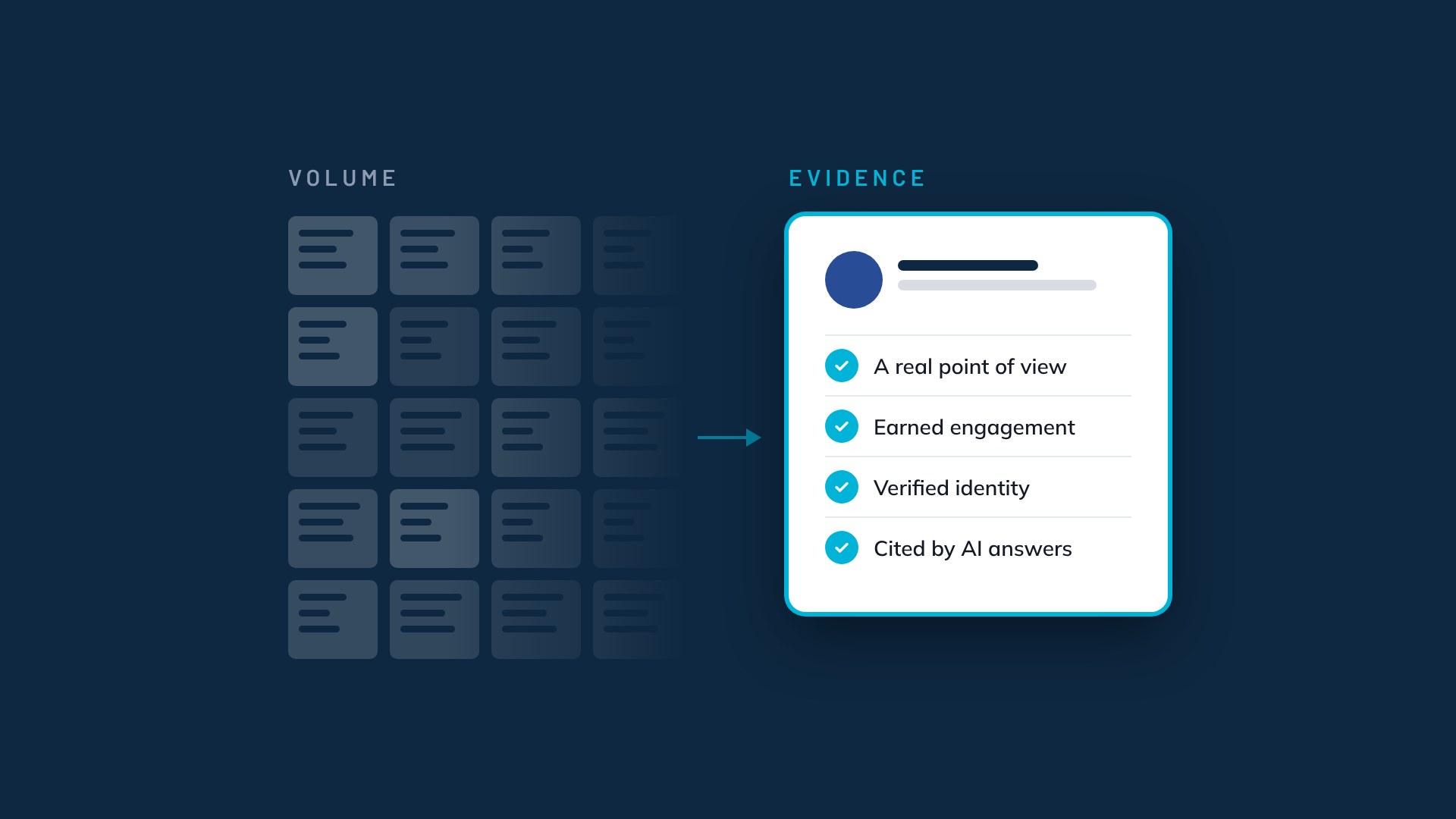
The LinkedIn feed ranker did not change this quarter.
Everything around it did.
Most people are still asking the old question: how do I get more reach? But Q3 quietly changed what reach is earned with, which is why we get so many comments and emails asking for assistance in this area.
LinkedIn is now measuring substance, identity and authenticity.
I spent this weekend analyzing last quarter's weekly Lilypath Authority Intelligence Briefs and discovered a consistent pattern. Volume used to be a strategy because the system couldn't tell the difference between a post with a point of view and a post built to fill a slot. Now it can.
Here are the five changes that matter most, and what to do about each.
1. "AI slop" is no longer a report button. It's a ranking layer.
On July 30, LinkedIn added a "Seems like AI slop" report button. More than a million people used it within weeks, according to Fortune.
That was the visible part. On September 15, LinkedIn said it has also built backend classifiers that limit slop without anyone reporting it, and that views of that content are down 40%.
The part most people missed is the definition. LinkedIn's test is about substance, not authorship: polished but no point of view, recycled, or built to game attention. LinkedIn's Creator Product Lead has said refining your language with AI is acceptable. And in August, LinkedIn removed its own "enhance your post" writing feature and replaced it with Post Proofreader, which only suggests edits to a draft you wrote.
Do this:
- Write the body of every post yourself. Use AI for research, additional inspiration and proofreading.
- Put something in every post a model can't invent: a named company, a real number, what you personally did.
- Retire the templated frameworks and generic openers now. LinkedIn says authors will see a tip in their post analytics when a post crosses a feedback threshold. Don't wait for that tip.
2. AI answer engines cite people, not company pages.
I wrote about this previously, but it is important. When AI answer engines retrieve and cite LinkedIn content, they are citing individual professionals much more than company pages.
Meltwater and LinkedIn's analysis of 9.5 million AI citations found that 75% of LinkedIn citations point to individual members' URLs, not company pages. The most-cited pieces share two traits: 92% use clear headings, and 67% include hard data.
That's a structural shift.
Do this:
- Publish under your name, not only your company's.
- Add one structured long-form Article a month, with real headings and real data. Articles are the LinkedIn format AI answers cite most per piece.
Train your bench to be your company's top messengers
This shift signals that companies need to be training up their bench to increasingly serve as top messengers for the company. A big part of this is making sure your bench has updated, accurate profiles that are optimized against what they want to be the subject matter expert on. Alignment is really important.
Do this:
- Update your LinkedIn profile. Make sure what you're posting about aligns with what your profile says you're an expert on.
3. Verification became three signals at once.
On September 23, LinkedIn expanded verification and said more than 115 million members are now verified.
Verification now touches distribution, credibility and hiring all at the same time. LinkedIn's VP of Trust Product told TechCrunch that verified members get, on average, 50% more post views and 90% more impressions. That's a company claim, not an audited figure, but the direction is clear. "Verified on LinkedIn" now also appears off-platform, in Truecaller and PeerSpot.
And it isn't only LinkedIn. Google's content guidance, updated October 5, now calls fabricated author identities, AI headshots and false credentials deceptive.
I talk a lot about the importance of owning your identity and maintaining it in an AI world. These changes make it more important than ever. I expect we'll see a lot more services around this in the near future.
Do this:
- Verify your identity and workplace this week. It's free.
- Confirm only colleagues you actually worked with.
- Sign everything you publish, anywhere, with a real byline linked to a verifiable bio.
4. Borrowed engagement is now an enforcement target.
LinkedIn's EU filing reported a 46% rise in detected inauthentic activity in the first half of 2026. LinkedIn says it is acting against engagement pods, automated posting tools and AI-generated engagement, and that it blocks hundreds of thousands of automated comment attempts every day.
Engagement you borrowed was always fragile. Now it's a liability.
Do this:
- Leave any reciprocal comment group. Turn off any tool that comments for you.
- Comment substantively where your audience already reads. One thoughtful comment beats ten fast ones.
- Don't post filler to hold a cadence. Posts that draw no engagement don't help you.
5. The ranker held still. Reach did not.
SocialPilot's tracker reports no confirmed ranking change between April and September. The March 2026 feed rebuild still governs.
But reach is falling across the board. MyFeedIn found median reach was lower for every format from March through August than in the prior six months.
Here's the opening inside that number. Multi-image posts and PDF carousels make up only a tenth of what gets published, so a genuinely useful one faces far less competition.
The format gap still looks like an edge, even if a smaller one.
Do this:
- Ship one reference-grade carousel or document a week: something worth saving.
- Benchmark against your own history, not against platform growth claims.
- Favor evergreen work. AuthoredUp reports that posts collecting saves and substantive comments 24 to 72 hours after publishing perform four to six times better in suggested feeds.
In Sum
None of this means your expertise matters less. It means the system now checks for it.
LinkedIn and AI platforms more broadly are reading for a point of view. AI answer engines are citing people who publish with structure and data. Verification is turning identity into a signal. Enforcement is stripping out the engagement nobody earned.
Every one of those changes favors the same person: the professional with something real to say, saying it under their own verified name.
Start with a five-minute audit
Open your last ten posts and ask:
- How many contain something only I could have written?
- How many carry a real number, a named company or a first-person result?
- Is my profile verified, and does it match what I publish?
- Is any of my engagement borrowed?
- When did I last publish something people would save?
What did you find? I'd like to hear what's changing in your own feed. Get in touch.
Erin Lanuti is Co-Founder and CEO of Lilypath. This article draws on Lilypath's Q3 2026 analysis of twelve Authority Intelligence Briefs, published September 9 through October 7, 2026.